
Fox Crossing Lawn Edging Services
Choose our expert lawn edging for a polished, professional look that enhances curb appeal, prevents grass overgrowth, and makes yard maintenance easier than ever.
Get a Free QuoteOur Fox Crossing Landscaping & Yard Care Services
When to Schedule Lawn Edging in Fox Crossing, Arizona – Seasonal Guide
In Fox Crossing, Arizona, the best times to schedule lawn edging are typically in early spring and late fall. These periods align with the region’s moderate temperatures and reduced risk of extreme weather, making it easier to achieve crisp, clean edges that last. The local climate, characterized by hot, dry summers and mild winters, means that edging during the peak heat or just before the first frost can lead to suboptimal results. Neighborhoods near Veterans Oasis Park and along Chandler Heights Road often experience unique microclimates, with varying shade coverage and soil types that can influence the timing and frequency of lawn maintenance.
Local environmental factors such as the area’s clay-heavy soils, sporadic monsoon rains, and the risk of drought all play a role in determining the ideal schedule for lawn edging. Homeowners should also consider municipal guidelines and water restrictions, which can affect when and how often landscaping services are performed. For more information on local regulations and best practices, visit the Town of Sudbury’s resource page.
Local Factors to Consider for Lawn Edging in Fox Crossing
- Tree density and shade coverage, especially in neighborhoods like Sun Groves
- Soil composition, with many areas featuring compacted clay or sandy loam
- Seasonal precipitation patterns, including monsoon storms
- Risk of drought and related municipal water restrictions
- Terrain variations, such as sloped yards or proximity to natural washes
- Local ordinances regarding landscaping and curb appeal
Benefits of Lawn Edging in Fox Crossing
Enhanced Curb Appeal
Defined Landscape Borders
Reduced Lawn Maintenance
Weed Growth Prevention
Improved Drainage Control
Long-Lasting Results
Fox Crossing Lawn Edging Types

Plastic Lawn Edging
Plastic edging offers a flexible and affordable solution for defining garden beds and pathways.
-
Metal Lawn Edging
Metal edging provides a sleek, durable border that resists weathering and maintains clean lines.
-
Stone Lawn Edging
Stone edging adds a natural, timeless look to landscapes while effectively separating lawn from garden areas.
-
Brick Lawn Edging
Brick edging delivers a classic appearance and sturdy boundary for flower beds and walkways.
-
Concrete Lawn Edging
Concrete edging is highly customizable and long-lasting, ideal for both modern and traditional landscapes.
-
Wood Lawn Edging
Wood edging brings a rustic charm and blends seamlessly with natural surroundings.
-
Rubber Lawn Edging
Rubber edging is eco-friendly and flexible, perfect for curved garden designs and safe for children and pets.
Our Lawn Edging Process
Site Evaluation
Marking Edges
Cutting the Edge
Debris Removal
Final Inspection
Why Choose Fox Crossing Landscape Services

-
Fox Crossing Homeowners Trust Us
-
Expert Lawn Maintenance
-
Reliable Seasonal Cleanup
-
Professional Team
-
Competitive Pricing
-
Personalized Service
-
Satisfaction Guarantee
Coordinating Lawn Edging Services with Fox Crossing's Public Works and Infrastructure Programs
Lawn edging along public-facing frontages, sidewalks, and curb lines in Fox Crossing requires awareness of municipal infrastructure responsibilities. Turf that encroaches into curb gutters, storm-drain inlets, or sidewalk joints can obstruct drainage flow and create tripping hazards on public walkways. Residents and property managers should confirm whether edging work along the right-of-way intersects with city-maintained infrastructure before beginning any mechanical cutting adjacent to curbs or utility boxes. Key coordination points include:
- Verifying the property boundary relative to the public right-of-way before edging along street frontages or alley approaches
- Keeping all soil, clippings, and debris generated by edging out of curb inlets, gutters, and storm-drain openings
- Reporting damaged curbing or exposed irrigation lines discovered during edging to the appropriate municipal department
- Scheduling edging to avoid conflicts with street sweeping or bulk collection days in the neighborhood
The Public Works & Utilities Department oversees street infrastructure, drainage systems, and right-of-way maintenance and can clarify frontage responsibilities for residential and commercial properties.
Fox Crossing Public Works & Utilities
Fox Crossing, AZ
Official Website: Public Works & Utilities
How Fox Crossing's Desert Heat and Alkaline Soils Affect Lawn Edging Results
Fox Crossing sits within the Phoenix metro low-desert environment, classified in USDA Hardiness Zone 9b–10a, where summer surface temperatures on concrete and asphalt regularly exceed 150°F. These conditions directly influence lawn edging quality and turf recovery along hardscape borders. Bermudagrass—the dominant warm-season turf throughout the area—spreads aggressively via stolons and rhizomes into sidewalk expansion joints, mow strips, and decomposed-granite borders, requiring frequent mechanical re-edging. Factors that shape edging outcomes in Fox Crossing include:
- Alkaline, calcium-carbonate-rich soils that compact along hardscape edges and resist clean blade penetration, particularly where caliche layers sit close to the surface
- Reflected heat from block walls, driveways, and patios that accelerates turf desiccation along edged borders, increasing the risk of browning and dieback at exposed root zones
- Monsoon-season runoff from July through September that deposits sediment along curb lines and can bury previously defined edges within a single storm event
- Irrigation overspray onto sidewalks and streets, which promotes turf creep into hardscape zones and contributes to mineral staining on concrete
The University of Arizona Cooperative Extension provides region-specific guidance on bermudagrass management practices suited to these low-desert conditions.
Navigating Fox Crossing's Stormwater and Property Maintenance Regulations for Lawn Edging
While lawn edging itself does not typically require a permit, the activity intersects with several regulatory frameworks that Fox Crossing property owners should understand. Soil and organic debris displaced during edging must not enter the municipal storm-drain system. Under Arizona DEQ Phase II MS4 requirements, municipalities in the Phoenix metro area are obligated to control pollutant discharge into stormwater conveyances, and property-level maintenance activities—including landscape edging—fall within the scope of these protections. Relevant compliance considerations include:
- Collecting and disposing of all edging debris on-site or through approved green-waste channels rather than sweeping material into gutters or street drains
- Avoiding mechanical edging that damages irrigation lines running parallel to sidewalks or curbs, which can cause uncontrolled water discharge onto public surfaces
- Maintaining turf edges so they do not obstruct pedestrian access on sidewalks or visibility at intersections, consistent with municipal property-maintenance standards
The Environmental Management Division supports environmental compliance and can address questions about stormwater protection responsibilities related to landscape maintenance activities. The Clean Water Act establishes the federal framework under which these local stormwater obligations operate.
Fox Crossing Environmental Management
Fox Crossing, AZ
Official Website: Environmental Management
Timing and Methods for Professional Lawn Edging in Fox Crossing's Climate
Effective lawn edging in Fox Crossing follows the growth cycle of bermudagrass and accounts for the extreme thermal environment. During the active growing season from April through October, bermudagrass stolons can extend several inches per month into hardscape zones, making regular edging essential. The Turfgrass Maintenance Guide for Low Elevation Arizona provides detailed seasonal management recommendations applicable to Fox Crossing properties. Professional standards and timing considerations include:
- Spring activation (March–April): Establish clean edge lines as bermudagrass breaks dormancy, removing winter rye overgrowth from hardscape borders where overseeding was applied
- Peak summer (May–September): Edge every one to two weeks to keep pace with aggressive stolon growth; schedule work during early morning hours to reduce heat stress on operators and freshly cut turf margins
- Monsoon season (July–September): Re-establish edges after significant rain events that deposit silt along curb lines and mow strips; clear accumulated debris from adjacent drainage paths
- Winter dormancy (November–February): Reduce edging frequency as bermudagrass enters dormancy; maintain clean lines along overseeded ryegrass borders if applicable
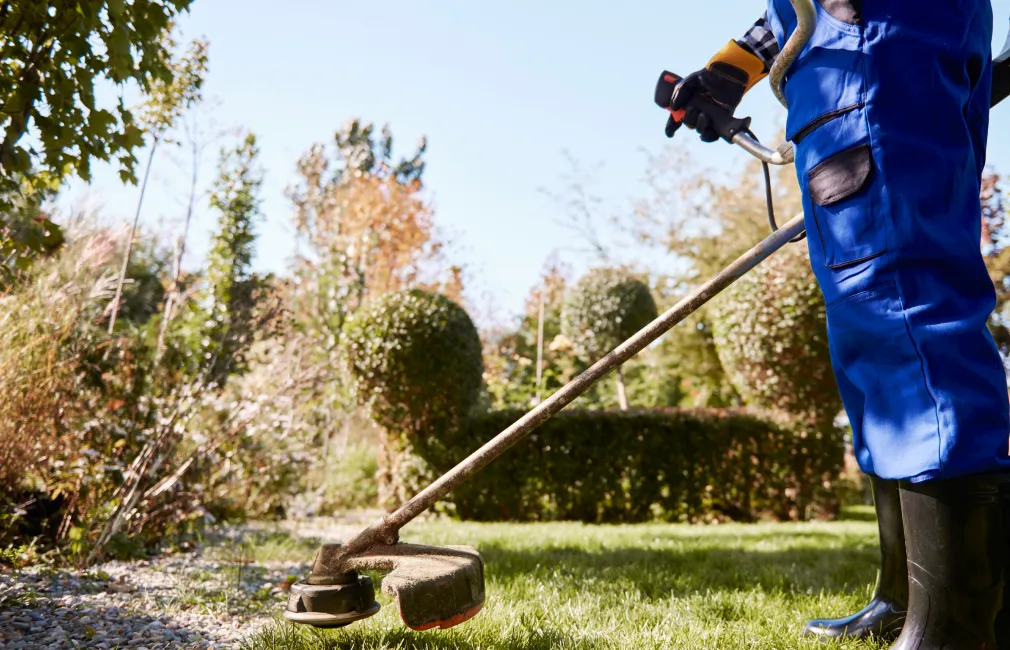
Blade-style rotary edgers produce the cleanest vertical cuts along concrete and are preferred over string trimmers for defining permanent hardscape borders. String trimmers remain appropriate for softer transitions between turf and decomposed-granite beds. Edging depth should follow the existing turf root zone without undercutting irrigation lines, which in Fox Crossing subdivisions often run within inches of sidewalk and curb edges.
What Neighborhoods Do We Serve Throughout Fox Crossing, AZ?
- Sun Groves — Established lots with mature bermudagrass lawns and block-wall perimeters that generate significant reflected heat along turf edges adjacent to patios and driveways
- Desert Ridge Estates — Larger residential parcels where turf borders transition into decomposed-granite desert landscaping, requiring precise edge definition to prevent stolon migration
- Copper Basin — Newer subdivision development with compacted fill soils along hardscape borders that can resist clean edger penetration and require periodic soil loosening at edge lines
- Ironwood Crossing — Properties near retention basins and drainage corridors where post-monsoon sediment deposits frequently obscure previously maintained lawn edges
- Mesquite Terrace — HOA-governed community with specific frontage appearance standards that include maintained turf edges along sidewalks and common-area borders